01App Launch
Open the AURIX app and start verification.
Aurix Network helps apps, AI platforms and enterprises verify real humans, understand user state, and deliver trusted digital experiences through mobile UI, enterprise console and SDK/API infrastructure.
Confidence
Please look at the camera. Aurix is detecting human signal.
Aurix becomes easier to understand when people can see the real usage flow: open the app, look at the camera, verify human presence, activate DID, and receive an eye-state result.
Open the app, look at the camera, and receive a clear result for Human Proof, DID, wellness dashboards and enterprise APIs.
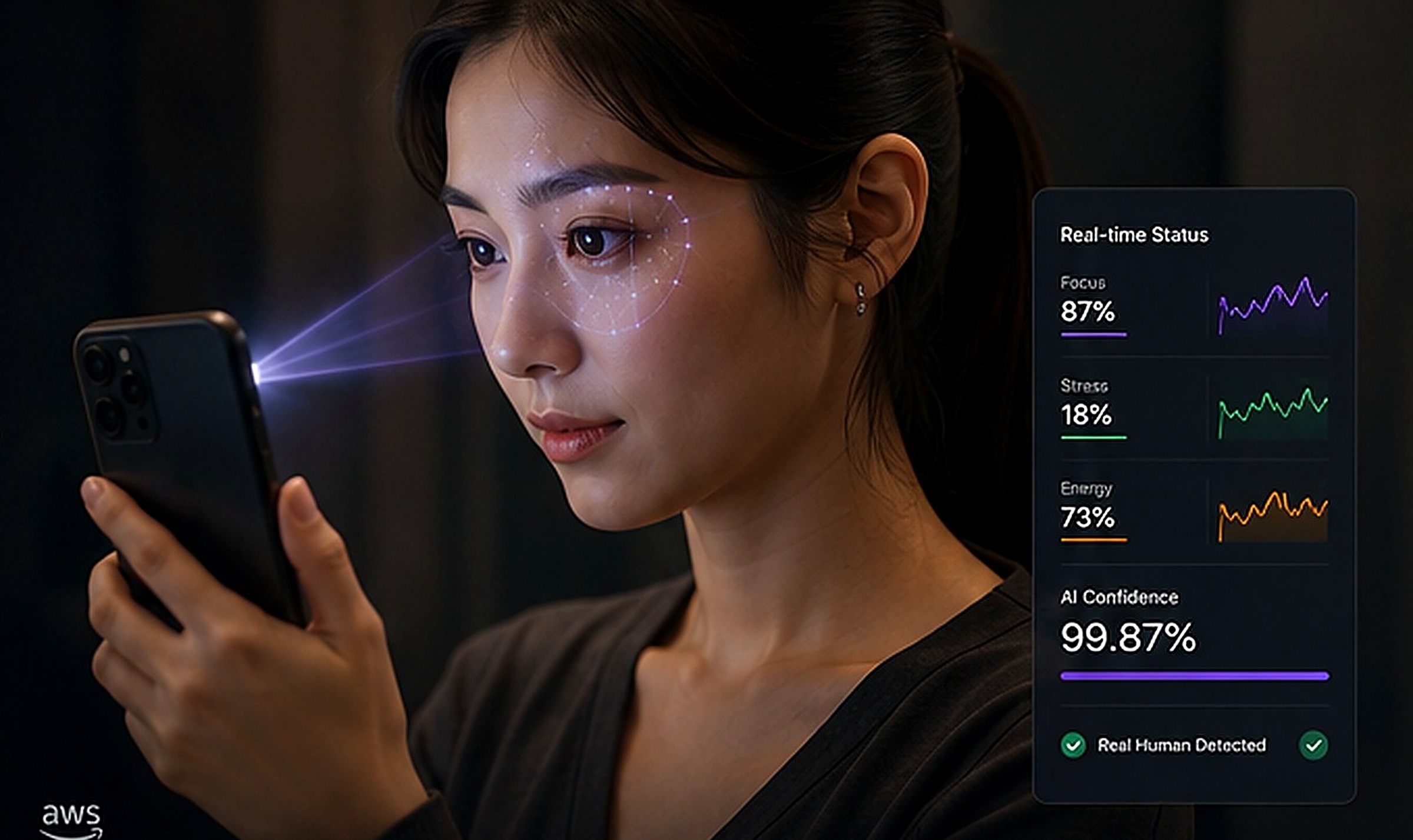
Users launch the app, look at the camera, and receive a result that can power human proof, wellness dashboards, DID flows and enterprise APIs.
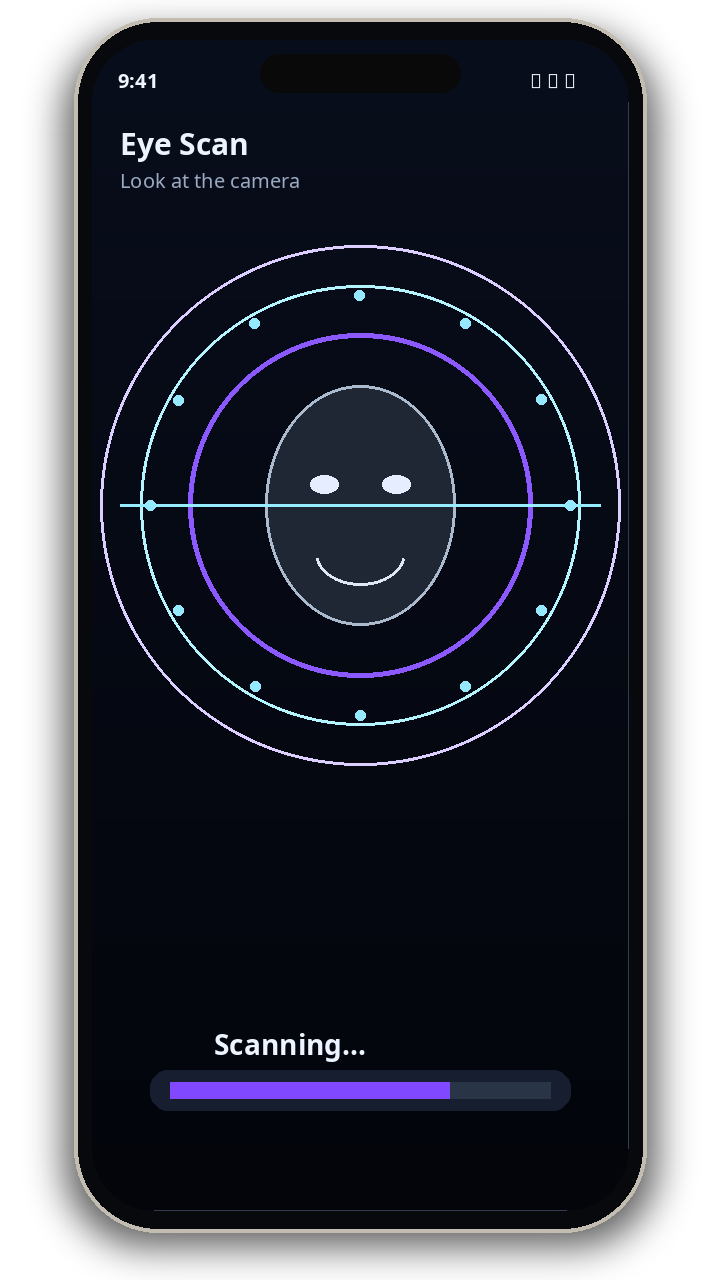
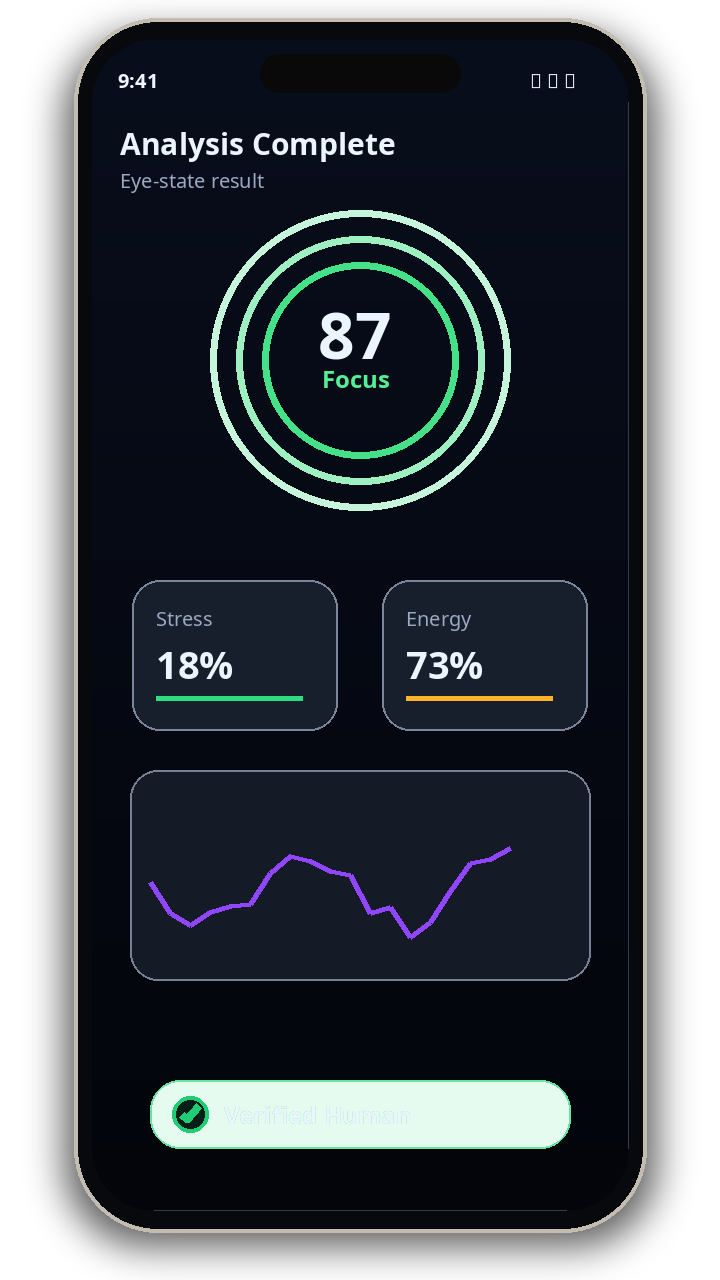
Aurix DID connects human proof, QR-based verification, and access approval into a clear mobile identity experience that enterprises can integrate without exposing raw biometric data.
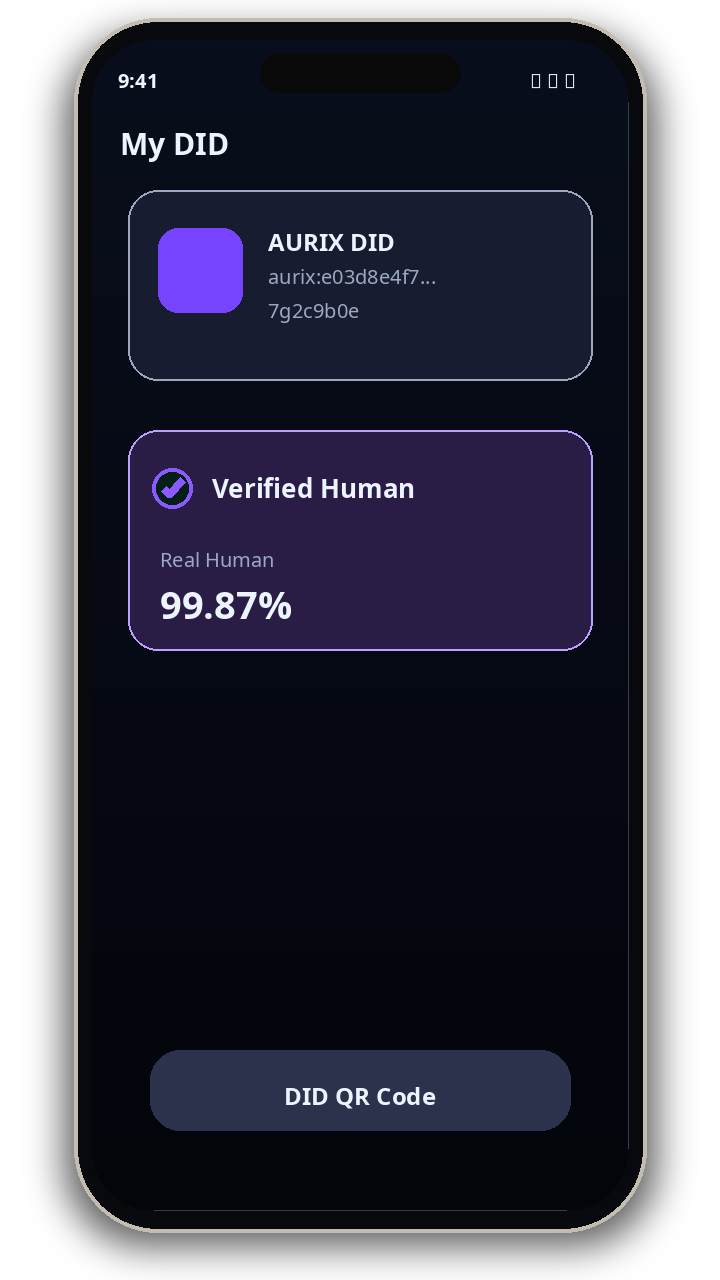
The user holds a privacy-first mobile DID linked to human proof status.
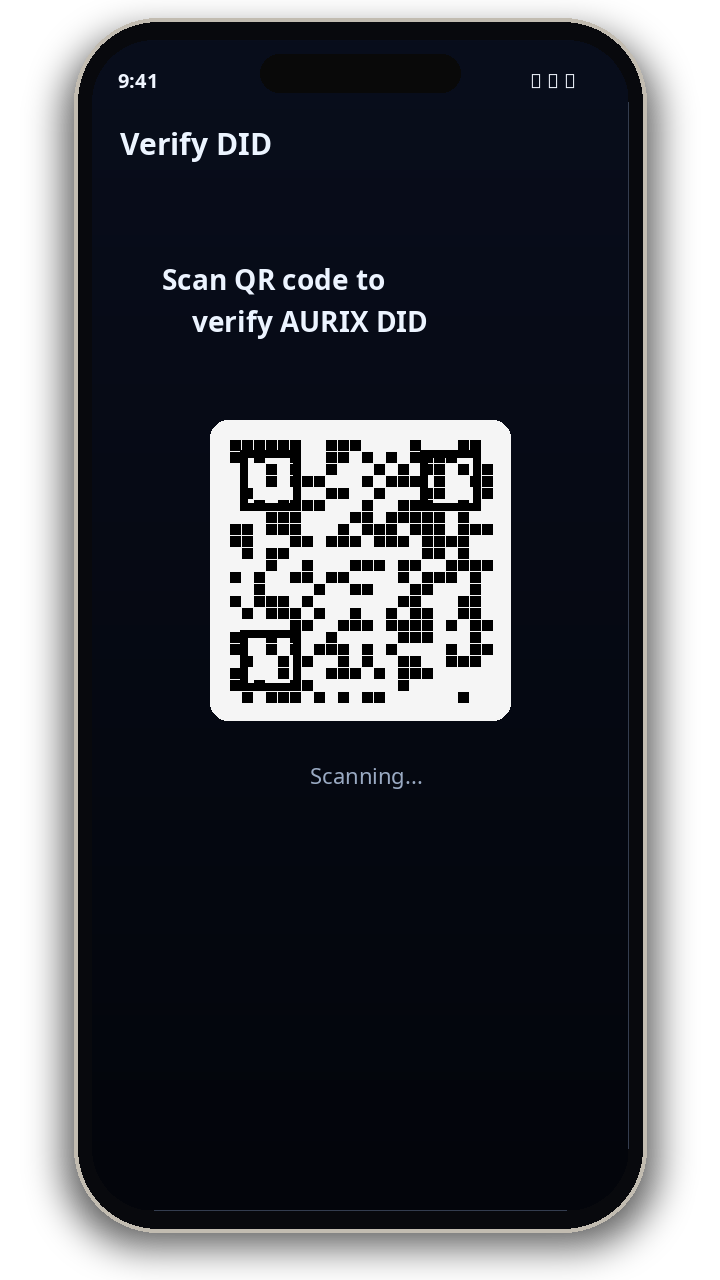
A service or partner requests verification through an Aurix DID QR flow.
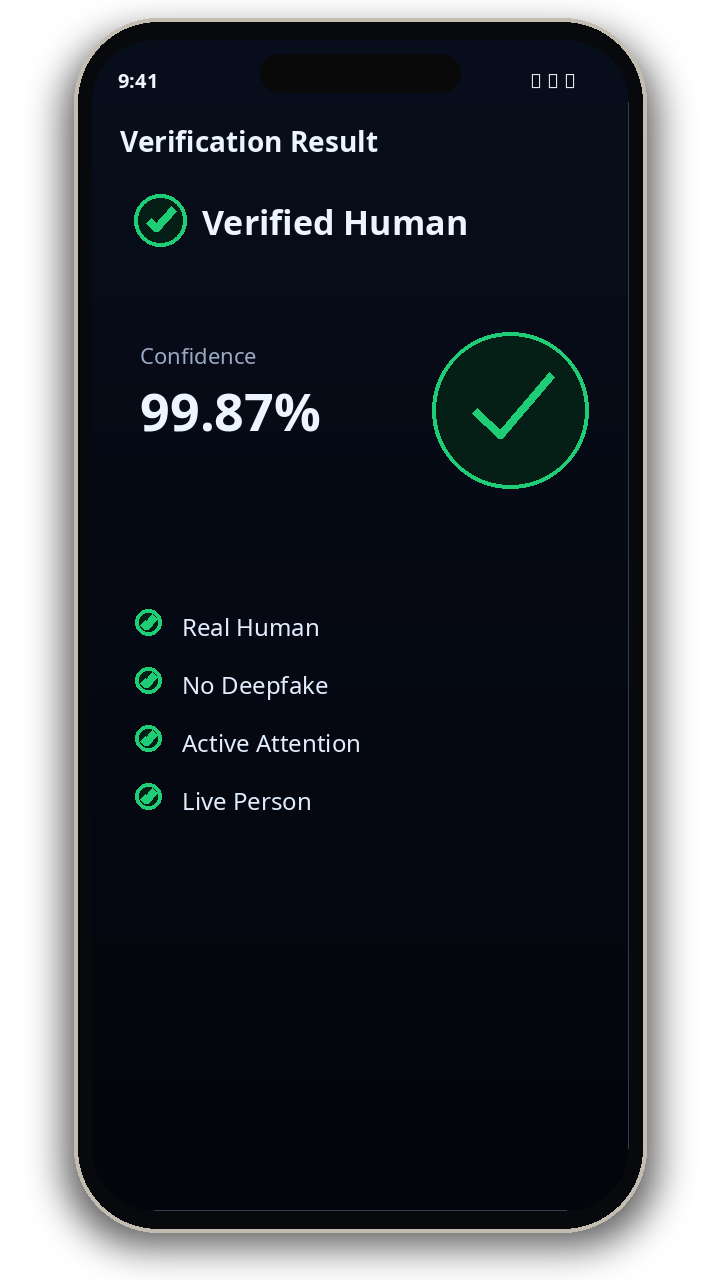
Aurix returns a verified human signal, confidence level, and liveness result.

The verified result unlocks login, service access, DID trust, or partner workflows.
Users can understand Aurix through a natural flow: launch the app, scan the eyes, verify human presence, activate DID, and receive clear results.
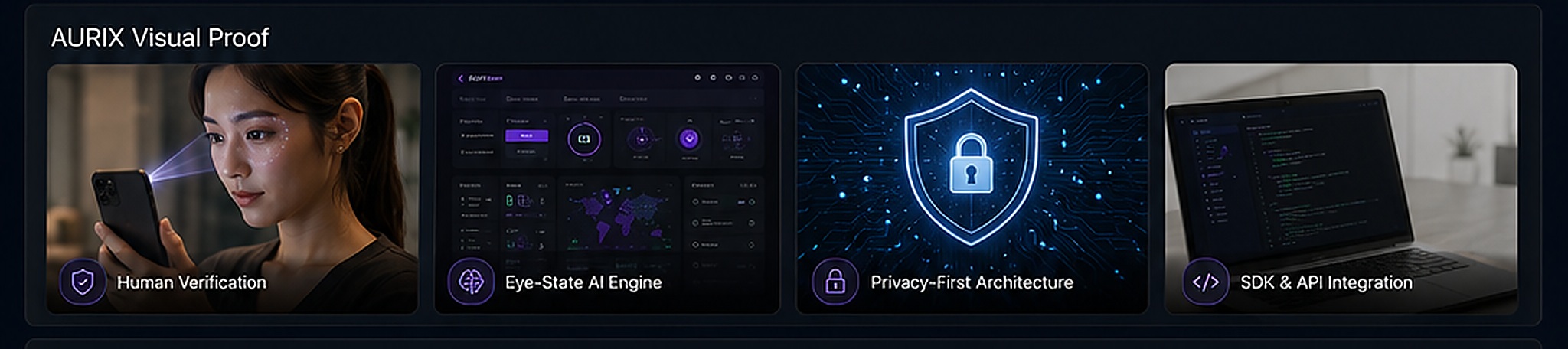
Aurix is designed as a product ecosystem, not a vague AI concept. Each product has a clear user, purpose and output.
Human Proof for login, access, AI platform usage and bot prevention.
Eye-state analysis engine for focus, fatigue, stress and active presence.
A simple dashboard that turns cognitive state into daily insights.
Human-centric biometric identity for secure access and trusted presence.
Developer and enterprise tools to embed verification into existing services.
The user starts login, AI access, enterprise authorization or wellness check.
Aurix captures a short eye-state and presence signal through mobile, web or device camera.
The platform returns Human Proof, confidence score and optional focus/fatigue indicators.
The result can unlock a service, update a dashboard or return an API response.
Human Proof is running. Keep your eyes inside the signal ring.
The user sees a simple verification flow. The enterprise sees actionable console data. Developers receive a clean API response. This makes Aurix practical for both consumer and infrastructure use.
Aurix should not feel like abstract AI. Every scan produces a product output: a decision, a score, an insight, or an API response.
Confidence 99.87%
Used for login, access control, AI resource protection and anti-bot workflows.
Used for AI wellness, attention quality, focus tools and human-state dashboards.
{
  "human_presence": "verified",
  "confidence": 99.87,
  "eye_state": "stable",
  "decision": "allow_access"
}
Used by developers to integrate Aurix into apps, platforms, enterprise systems and AI agents.
Aurix becomes valuable when a service needs proof of real human presence, user trust or simple state intelligence.

Reduce abuse from fake users, synthetic accounts and automated traffic before AI resources are consumed.
Add live human verification to remote access, internal systems and sensitive workflows.
Offer focus and fatigue insight without turning the product into a medical dashboard.
Connect biometric presence to a privacy-first human identity layer.
Enterprise customers need logs, confidence scores, policy decisions, API keys and integration monitoring. Aurix presents Human Proof as a business workflow.
Allow, challenge, review or block depending on confidence and risk.
Store verification metadata without exposing raw biometric data.
The product should feel easy to adopt. Aurix is positioned as an API-first infrastructure layer.
POST /v1/verify
{
  "mode": "human_proof",
  "signal": "eye_state",
  "session_id": "AURIX-001"
}

→ human_presence: verified
→ confidence: 99.87
→ focus_state: stable
→ decision: allow_accessThe strongest position is the combination of real-human verification, eye-state intelligence, product UI and enterprise infrastructure.
The product becomes easier to understand when mapped to real customer needs.
Aurix should be understood as a product stack. The same verification and eye-state intelligence can appear as a user app, an enterprise console, a developer API, or a partner dashboard.
Users complete Human Proof and receive simple eye-state wellness insights in a premium mobile experience.
Companies monitor verification events, confidence scores, risk signals and usage analytics.
{
  human_presence: "verified",
  confidence: 99.87,
  decision: "allow_access"
}Apps and AI platforms call Aurix through API/SDK and receive a clean decision response.
Partners connect Human Proof, AI Wellness and DID layers into their own services.
Each scenario starts with a customer problem and ends with a product output that can be measured.
Problem: bots and fake users consume expensive AI resources.
Aurix: verify live human presence before high-value AI usage.
Output: allow access, challenge, review or block.
Problem: passwords and 2FA do not prove live human presence.
Aurix: add eye-state Human Proof to sensitive workflows.
Output: verification event, confidence score and session log.
Problem: focus and fatigue are hard to capture in simple consumer UX.
Aurix: translate eye-state signals into friendly wellness insight.
Output: focus, stress, fatigue and recovery indicators.
Problem: identity systems lack human-state context.
Aurix: connect biometric presence to DID and access systems.
Output: trusted human identity and presence layer.
The website must show that Aurix is not just a concept. It can be sold, tested and integrated as a product.
Show mobile Human Proof and dashboard outputs to customers.
Test verification flows with a selected app, platform or enterprise workflow.
Connect Verify API, SDK and enterprise console to customer systems.
Expand usage into Human Proof, AI Wellness, DID and analytics.
Aurix is designed to minimize exposure of raw biometric signals. The platform turns eye-state inputs into decision-ready outputs such as Verified status, confidence score, risk signal, access decision and audit logs, so enterprises can integrate human trust without handling unnecessary sensitive data.

This gives the business a clearer sales path: consumer experience, enterprise verification and infrastructure API.
Consumer-facing eye-state check and wellness insight.
Verification console for companies and platforms.
SDK/API layer for developers and partners.
This section turns the product into a clear business offer: what customers can buy, pilot, integrate and expand.
For apps, AI platforms and communities that need to confirm a real live user before allowing access or usage.
For wellness, learning, work and AI companion products that need simple human-state indicators.
{
  verified: true,
  confidence: 99.87,
  decision: "allow"
}For companies that want Human Proof and Eye-State AI inside their existing product without building biometric AI from scratch.
Aurix must be understood as a business result, not only a technology layer.
Platforms can see account activity, but cannot easily understand whether the action comes from a real, attentive human.
Services can verify human presence, read attention quality, and return a clean decision to apps, dashboards or APIs.
Customers reduce fake activity, improve user trust and launch new human-state services without building the full AI stack.
The goal is to remove confusion and make Aurix easier to explain in one meeting.
Both. The same intelligence layer can appear as a mobile user app, an enterprise console, or an SDK/API inside another service.
The most practical entry product is Human Proof: verification for login, access, AI platform use and anti-bot workflows.
EYEMOTION is the eye-state AI engine that interprets human presence, focus, fatigue, stress and signal stability.
Apps, AI platforms, enterprises, identity services and wellness platforms can pay for API usage, SaaS access or enterprise licensing.
No. Aurix is positioned as Human Verification and Human-State Intelligence infrastructure, not as a medical diagnosis service.
The eye is a natural interface for attention, presence and human-state signals, making it useful for AI-era verification and experience design.